Blog
Essays on product
& judgment.
Longer-form thinking on product leadership, continuous discovery, and what actually changes for teams in the AI era.

Shorter takes that I posted on LinkedIn.
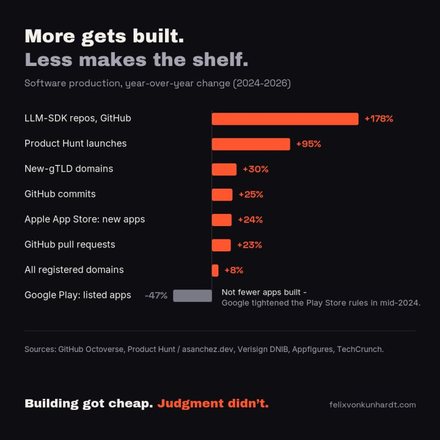
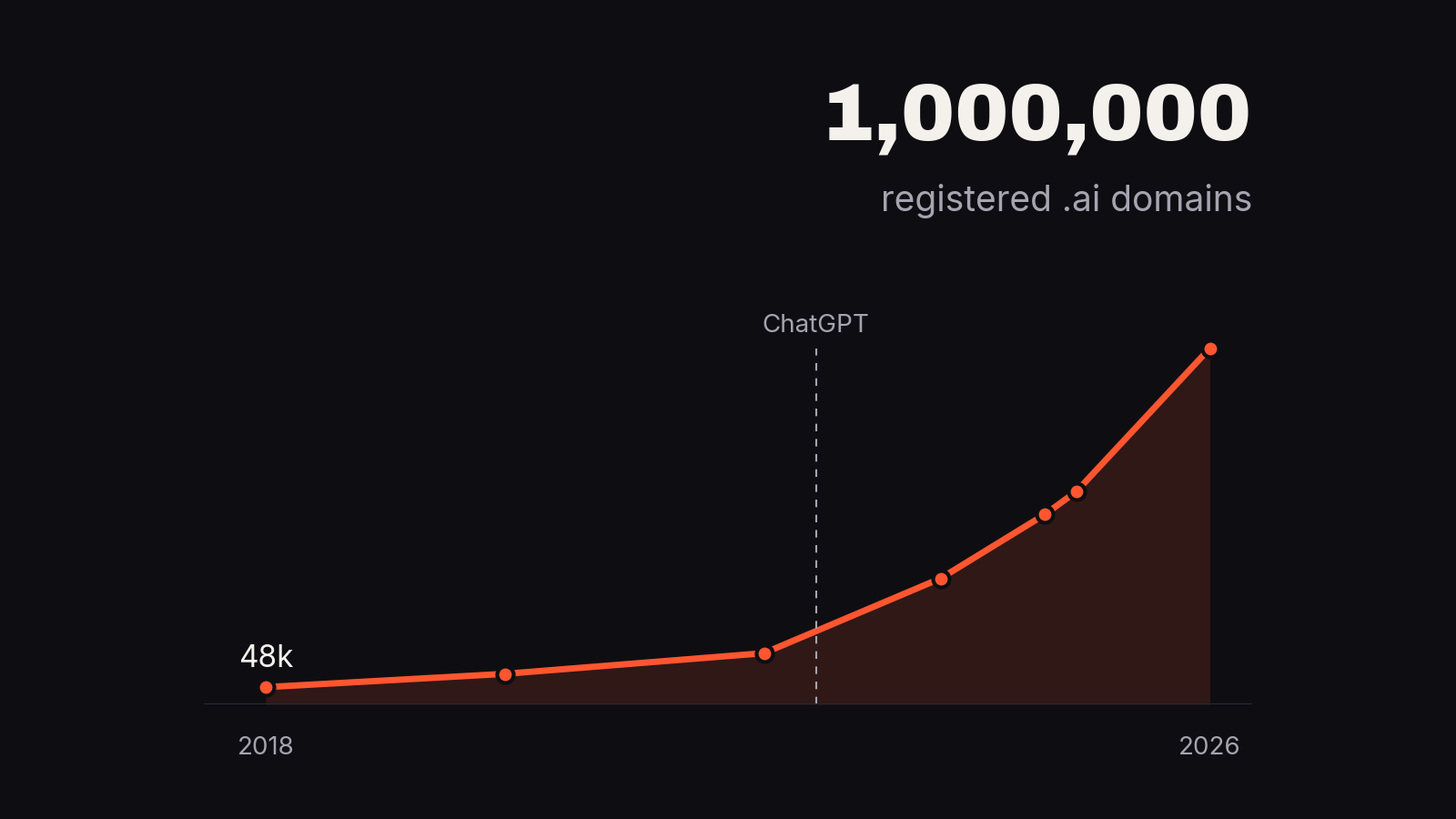
I have used the line “building got cheap, judgment didn’t” for a while - so I went looking for evidence. GitHub just had its busiest year ever, .ai domains went from 144k to over a million, Product Hunt launches rose 95%. And 97% of solo launches never get a second update. More gets built than ever; less of it survives. The scarce part moved to deciding what is worth building at all.
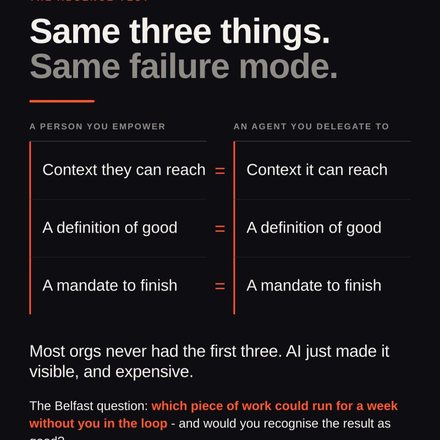
The clearest proof I ever got that a team was working came from a week I wasn’t there. Flu kept me home while they ran their offsite in Belfast - and the decisions that came back were the ones I would have pushed for, plus two I hadn’t thought of. It worked because they had my context, knew what good looked like, and nobody waited for permission. An agent needs exactly those three.
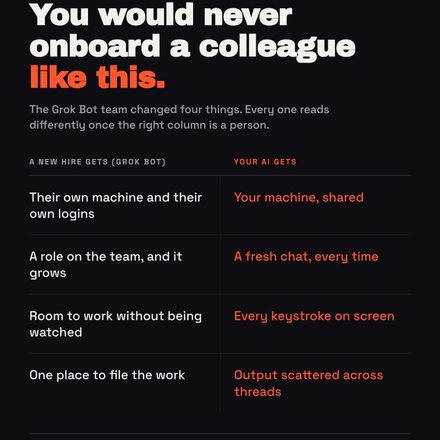
The hottest AI product of the year was built by a handful of people in four weeks - and none of the reasons it worked had anything to do with AI. A small team cut off from the company, 200 to 300 onboarding calls run by the core team themselves, and two weeks before launch spent removing features. Discovery, autonomy and the nerve to cut: twenty-year-old craft running at four-week speed.
Any workflow looks good on paper. What matters is where it breaks when a real team uses it. Over seven weeks Michael Albers and I laid out a product discovery loop for the AI era; this closing part names the five places it collapses. Neither of us has run the whole loop end to end yet - the open question is which team runs it first, and which claim falls down when they do.
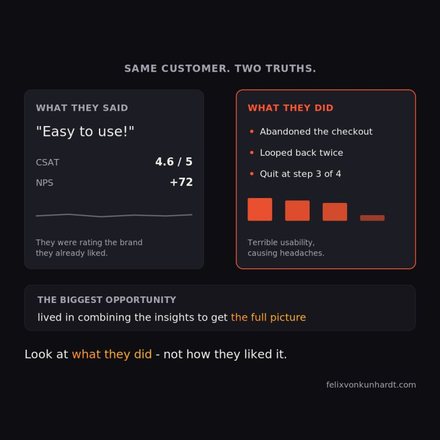
A great survey score can hide a broken product. At Medallia I owned two teams measuring the same customers in opposite ways - one what they said, one what they did. Surveys scored a painful checkout just fine; the click data showed the struggle but not the cost. The gap between the words and the clicks is where the biggest improvements hid. When opinion and behaviour disagree, trust behaviour.
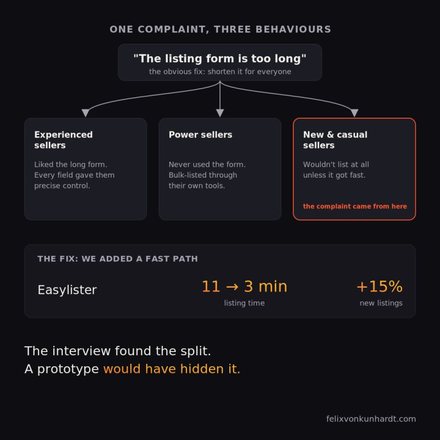
At eBay, everyone complained the listing form was too long. Today we’d have prototyped three shorter versions by lunch and been confidently wrong. Opportunity interviews showed one complaint hiding three different behaviours - so we didn’t shorten the form, we added a fast path. Listing time went from 11 minutes to 3, new listings up 15%. A prototype bends the conversation toward the solution you already imagined. The interview keeps it open.
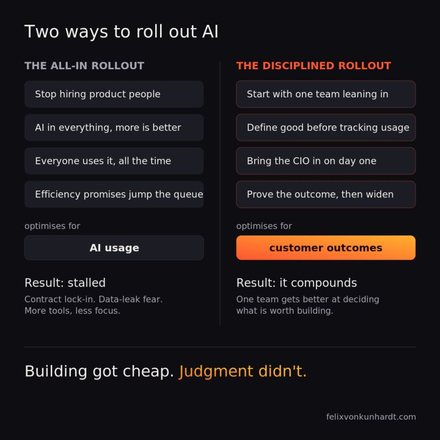
I’ve watched more than one leadership team go all in on AI and quietly make their product org slower, not better. Stop hiring PMs, put AI in everything, make adoption itself the goal - every step optimises for AI usage rather than customer outcomes. The reframe: don’t roll out AI. Roll out a sharper way for one team to decide what’s worth building, and let AI accelerate that.
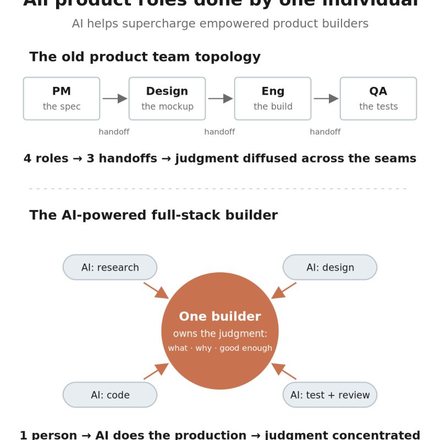
LinkedIn just killed the Associate Product Manager. The new role is “Associate Product Builder” - one person who prototypes, designs and ships, hired off a 60-second demo instead of a resume. Meanwhile Workday’s CTO, Instagram’s co-founder and Karpathy all traded org charts for keyboards. The builder role concentrates what we used to split: what to build, why, and what counts as good enough.
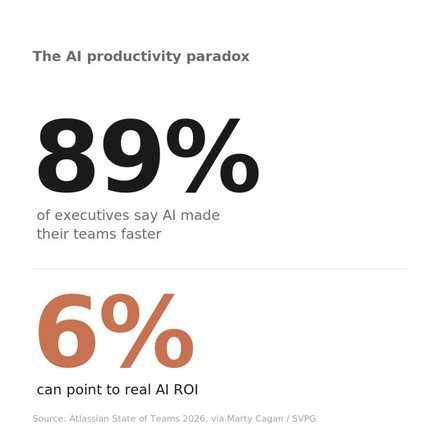
89% of executives say AI made their teams faster, but only 6% can point to real ROI. Marty Cagan calls it the AI Productivity Paradox. It stops being one once you see what got cheap (building) and what didn’t (deciding what deserves to be built). The useful question isn’t how to ship faster - you already can - it’s how to get better at knowing what to ship.
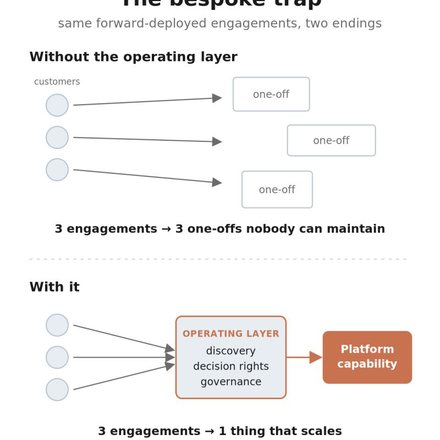
Going forward-deployed is the right call, but it’s also where I’ve watched good teams quietly turn into expensive custom shops. Embedding is the easy half. The operating layer around it, real discovery, clear kill-and-keep decisions, the governance to lift learnings back into the product, is the half that decides whether it works.
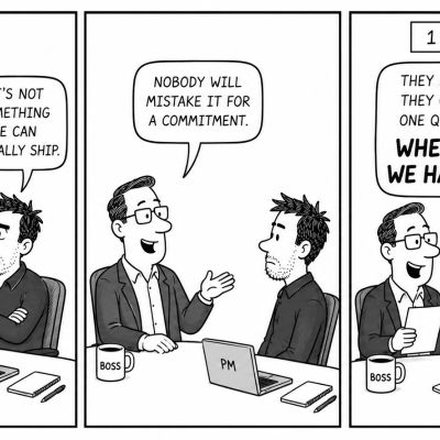
Every prototype is a promise you didn’t mean to make. AI made prototypes nearly free, so more of them survive for reasons that have nothing to do with what customers actually need. Write down what would make you kill it before it exists, while a “no” is still cheap.
AI made building cheap, but building was never the bottleneck. Delivery becomes a commodity; discovery becomes the differentiator. Five things Michael Albers and I have come to believe about product discovery in the age of AI.

We hire brilliant product people and then treat them like order-takers. After 25 years building and rebuilding product orgs, I’m making the fix my full-time job: coaching product leadership in the age of AI.